

Resource Management: Hand, Energy, and Not Over-Committing
Your cards are a budget. This guide is about spending that budget so you never run out at the moment that decides the game.
Your cards are a budget
Think of everything you have as a budget: the cards in your hand, the Energy you can attach, the once-per-turn Supporter, and the gust effects in your deck. You spend from that budget every turn, and you cannot earn it back faster than your draw lets you. Resource management is the discipline of spending so that you still have what you need at the moment the game is decided, instead of running dry one turn too early.
Most games are not lost because a player ran out of good cards in their deck. They are lost because a player spent a key card or a key Energy attachment a turn before they needed it, and then could not answer what came next. Spending well is as important as drawing well.
A helpful reframe is that every card in hand is two things at once: a thing you can do and a thing you have not yet committed. The moment you play it, you collapse the second into the first. That is fine when the play clearly advances your plan, but it is a quiet loss when you spend it just to thin your hand or because you had nothing better to do. The best resource managers regularly end a turn with cards still in hand on purpose, because keeping options is itself a resource.
The Supporter-per-turn constraint
You may play only one Supporter per turn. That single rule makes Supporter-based draw the scarcest resource in the game. Every turn you get exactly one big draw or utility Supporter, and once you have used it you are done until next turn. This is why which Supporter you play, and when, is one of the most important decisions you make. Burning a draw Supporter on a turn you did not need to draw wastes the one renewable resource you cannot stockpile, and choosing a utility Supporter over draw means going a turn without refilling. Treat your Supporter for the turn as a real decision every time, not an autopilot draw.
Energy as a resource
Energy is a resource with its own constraint: you normally attach one per turn from your hand, so each attachment is a commitment you cannot easily take back. How you spend those attachments shapes the rest of the game.
- Attach timing: an Energy attached to a Pokémon that gets knocked out next turn is often wasted. Attach toward the attacker that will actually do the work.
- Spreading versus committing: spreading Energy across several Pokémon keeps options open but can leave you with nothing fully powered, while committing to one attacker is faster but riskier if that attacker is removed.
- Acceleration: cards or attacks that let you attach extra Energy beyond your one per turn are how decks power up on time. Plan around how much acceleration you have rather than hoping for it.
- Do not over-attach: putting more Energy on a single attacker than its attack needs is wasted budget unless that extra Energy directly secures a knockout or survives an expected removal.
Real card examples
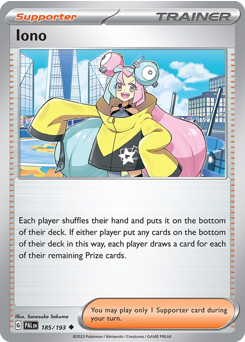
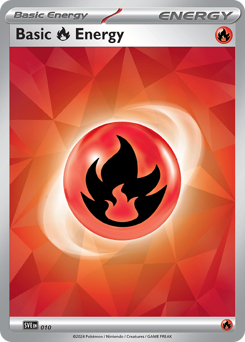
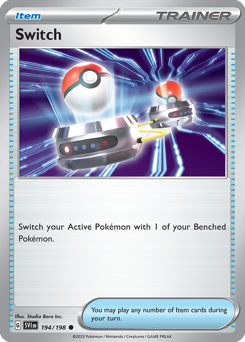
Holding a card until it matters
You draw a Switch early and have no reason to use it yet. It is tempting to play it just to thin your hand, but if you expect the opponent to gust up one of your support Pokémon next turn, that Switch is your escape. Holding it costs you nothing now and saves you the game later. Spending it early to feel productive throws away the exact answer you anticipated needing. The card is worth far more in hand as an option than face down in your discard for no payoff.
Hand size and refresh
A big part of resource management is knowing when to empty your hand and when to hold it. Some draw effects refill you to a fixed amount or shuffle your hand away, which means a near-empty hand turns into a full one, while a full hand turns into the same fixed amount and wastes the difference. If you are about to play a refill that does not care about your current hand size, it is fine to spend down first. But if you are planning to use a shuffle-and-draw effect like Iono, or you expect the opponent to use one against you, the math changes: a small hand is sometimes exactly what you want, and other times you need to bank cards before the refresh wipes them. Read whether your next draw rewards a small hand or punishes it, and size your hand to match.
Common mistakes
- Dumping the hand every turn: playing out every card to feel productive, then having no options when the opponent does something unexpected.
- Over-attaching: piling Energy onto one attacker beyond what its attack needs, wasting attachments you could have spread or saved.
- Wasting gust early: spending a gust effect like Boss's Orders for a small early prize when holding it for the game-winning knockout was worth far more.
How this connects to deckbuilding
How forgiving your in-game resource management can be is decided when you build the deck. The number of recovery cards you run determines whether spending a resource is a temporary setback or a permanent loss. Your Energy acceleration count decides whether a wasted attachment is catastrophic or just a minor delay. Even your draw Supporter count shapes how often you can afford to spend down your hand and still refill. Build in enough recovery and acceleration and you get a forgiving resource curve, where the occasional over-commitment does not end the game. Build them too thin and every resource decision becomes a knife edge.
Put it into practice
Build, test, and tune your own Pokémon deck in the TCG Stacked deck builder.
Open the Deck Builder