

Liabilities: Bench Risk, Dead Cards, and What Loses Games
Most losses are not flashy. They come from a liability you left on the board or in your deck. This guide is about finding and removing them.
The quiet way you lose
Most games are not lost to a brilliant play by the opponent. They are lost to a liability you created yourself: a Pokémon you put on the bench that should not have been there, a card in your hand that could never do anything, or a deck full of one-of cards that turned half your draws into dead air. A liability is anything you control that quietly works against you, and the dangerous thing about liabilities is that they do not announce themselves. The game just feels a little harder than it should, until suddenly it is lost.
Learning to spot liabilities is largely a matter of asking, for everything you put into play or into your deck, what is the worst thing this can do to me. The best players are constantly running that check, and they remove the liability before it costs them rather than after.
Bench liabilities
Your bench is not a free parking lot. Everything you put there can be targeted by a gust effect, so each benched Pokémon is a question: if the opponent drags this into the Active spot and knocks it out, how much does it cost me. Some answers are fine, and some hand the opponent the game.
- Multi-prize Pokémon benched too early: an ex or other multi-prize Pokémon sitting on your bench before it is ready to attack is a stack of free prizes waiting to be gusted. If it is not contributing yet, it is mostly a target.
- Fragile support Pokémon: low-HP support Pokémon that you rely on can be pulled Active and knocked out, removing the ability you needed and, if they are worth multiple prizes, giving up the prizes too. The more central the support piece, the more painful losing it is.
- Anything that turns one knockout into the game: ask whether a single gust and knockout on a benched Pokémon swings the prize race decisively. If yes, that Pokémon is a liability until you can protect it or it has earned its place.
Real card examples
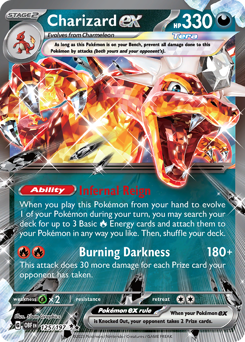
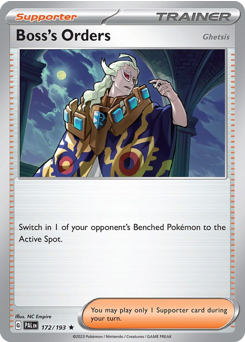
This does not mean never bench anything. It means bench with intent. Put down what you need for this turn and the next, and be slower to commit fragile or high-value Pokémon that the opponent would love to gust. An empty bench slot you did not have to fill is one fewer target you handed over.
Dead cards
A dead card is a card that, right now, cannot do anything useful. Some cards are situational by nature: a counter to one specific deck, a recovery card with nothing to recover, a tool with no valid target. Held at the wrong moment, these clog your hand and effectively shrink it, because a seven-card hand with three dead cards plays like a four-card hand. They also waste the value of your draw and search, which spend their effort handing you cards you cannot use.
The deeper cause of dead cards is often deckbuilding. Too many one-of cards means many of your draws bring you a single situational copy of something rather than a piece of your core engine. Each one-of is a card you will usually not want when you draw it, and a deck stuffed with them produces dead draws far more often than a tighter list with fewer, more flexible cards. Variety feels powerful when you build, but in practice it frequently just raises the odds that any given draw is dead.
A benched support Pokémon gusted for the game
You have a multi-prize support Pokémon on your bench whose ability powers your whole engine, and you left it there because it was doing useful work. The prize count is close. Your opponent plays Boss's Orders, pulls that support Pokémon into the Active spot, and knocks it out. Because it is worth multiple prizes, that single knockout swings the prize race in their favor, and because it was your engine, you also lose the ability you were relying on to recover. One gust did double duty: it took the prizes and removed your way to fight back. The Pokémon was pulling its weight, but it was still a liability, because its presence on the bench was the single play that lost you the game.
Prize liabilities
Liabilities also live in your prizes and your attacker lines. If your deck has a single attacker line that everything depends on, that line is a liability: one or more of its key pieces can be sitting in your prizes where you cannot use them until you take knockouts, and if the opponent removes the rest, you have no backup. A deck that can only win one way is fragile to anything that disrupts that one way, whether it is a prized key card, a knockout on your only attacker, or a bad opening.
The defense is redundancy and backup. Running more than one path to your win condition, and enough copies of key pieces that having one prized does not strand you, turns a single point of failure into something the opponent has to break several times. You cannot control what gets prized, but you can build so that any one prized card is an inconvenience rather than a loss.
Common mistakes
- Over-benching: filling the bench with Pokémon you do not need this turn, handing the opponent extra gust targets and prizes for free.
- Keeping dead tech: holding situational cards in hand turn after turn, letting them shrink your effective hand size instead of cutting them from the list.
- Ignoring gust math: forgetting that everything on the bench can be pulled Active, and benching a high-value Pokémon without checking what a gust and knockout would cost you.
How this connects to deckbuilding
Liabilities start in the decklist, which means most of them are fixable before a game ever begins. Cutting dead cards, trimming the pile of one-of tech down to the pieces you actually need against common decks, and thickening thin attacker or evolution lines all remove liabilities at the source. A deck with fewer dead draws and fewer single points of failure produces fewer of those quiet, self-inflicted losses, and it is far more forgiving when a key card gets prized or a key Pokémon gets gusted. When you build, treat every slot as a question of what it does on its best turn and what it costs you on its worst, and cut the cards whose worst case shows up too often.
Put it into practice
Build, test, and tune your own Pokémon deck in the TCG Stacked deck builder.
Open the Deck Builder